
Depth 10 · Ice giant
Uranus
Uranus is the seventh planet from the Sun, an ice giant whose interior is mostly a hot, dense fluid of water, methane and ammonia. It spins tipped almost completely on its side, which gives it the most extreme seasons of any planet.
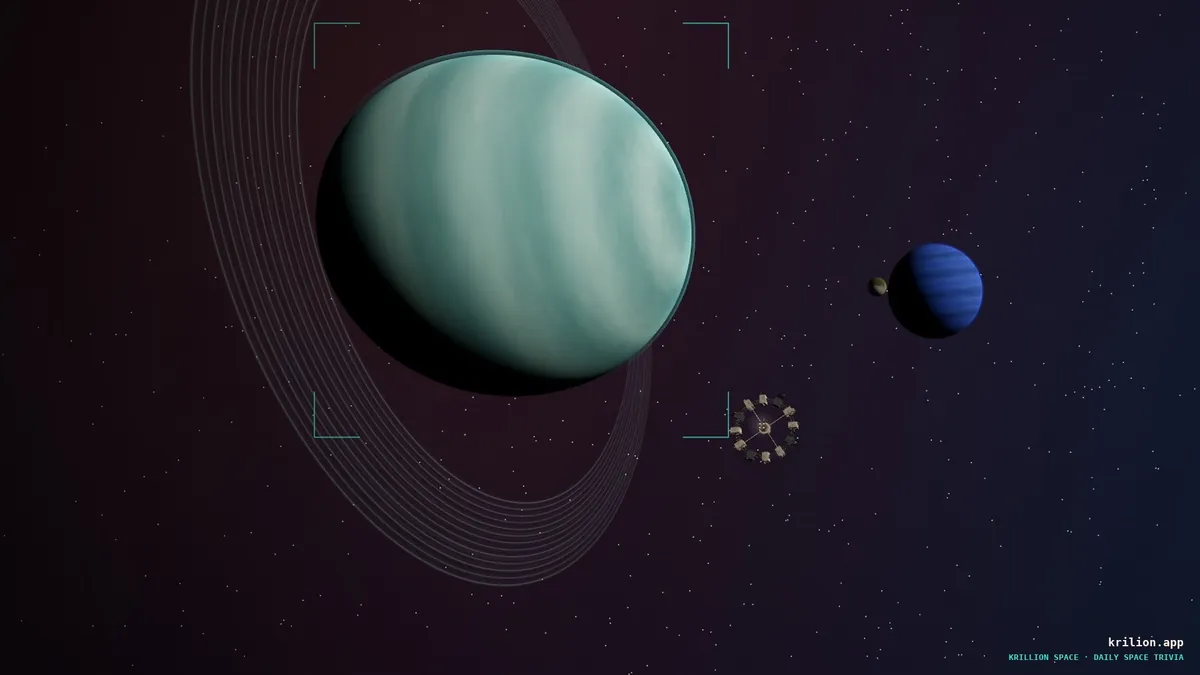
Fact sheet
- Type
- Ice giant planet
- Distance
- About 2.9 billion km (1.8 billion miles), or about 19 AU, from the Sun on average
- Size
- Equatorial diameter about 51,118 km (31,763 miles), about four times as wide as Earth
- Discovered
- Discovered 13 March 1781 by William Herschel
- On the voyage
- Depth 10, in the Outer Sol section of the route, between Titan and Neptune
Things to know
- Uranus's axis is tilted about 97.8 degrees, so it rolls around the Sun on its side and each pole spends about 21 years in darkness during its winter. NASA
- A year on Uranus lasts about 84 Earth years, while one rotation takes about 17 hours, and it spins in the opposite direction to most planets. NASA
- Parts of its atmosphere drop to about 49 K (-224°C), making them colder than Neptune even though Neptune is farther from the Sun. NASA
- William Herschel spotted Uranus on 13 March 1781; he first took it for a comet or a star. NASA
- During its 1986 flyby, Voyager 2 found 10 new moons and two new rings, and passed about 81,500 km (50,640 miles) from the planet. NASA
Missions
Voyager 2 is the only spacecraft to have visited Uranus, flying past on 24 January 1986.
Sources
Reach depth 10 on a voyage to fly past Uranus yourself. Every right answer warps your ship one stop deeper.
Play Krillion Space