4K only
Dive to low orbit
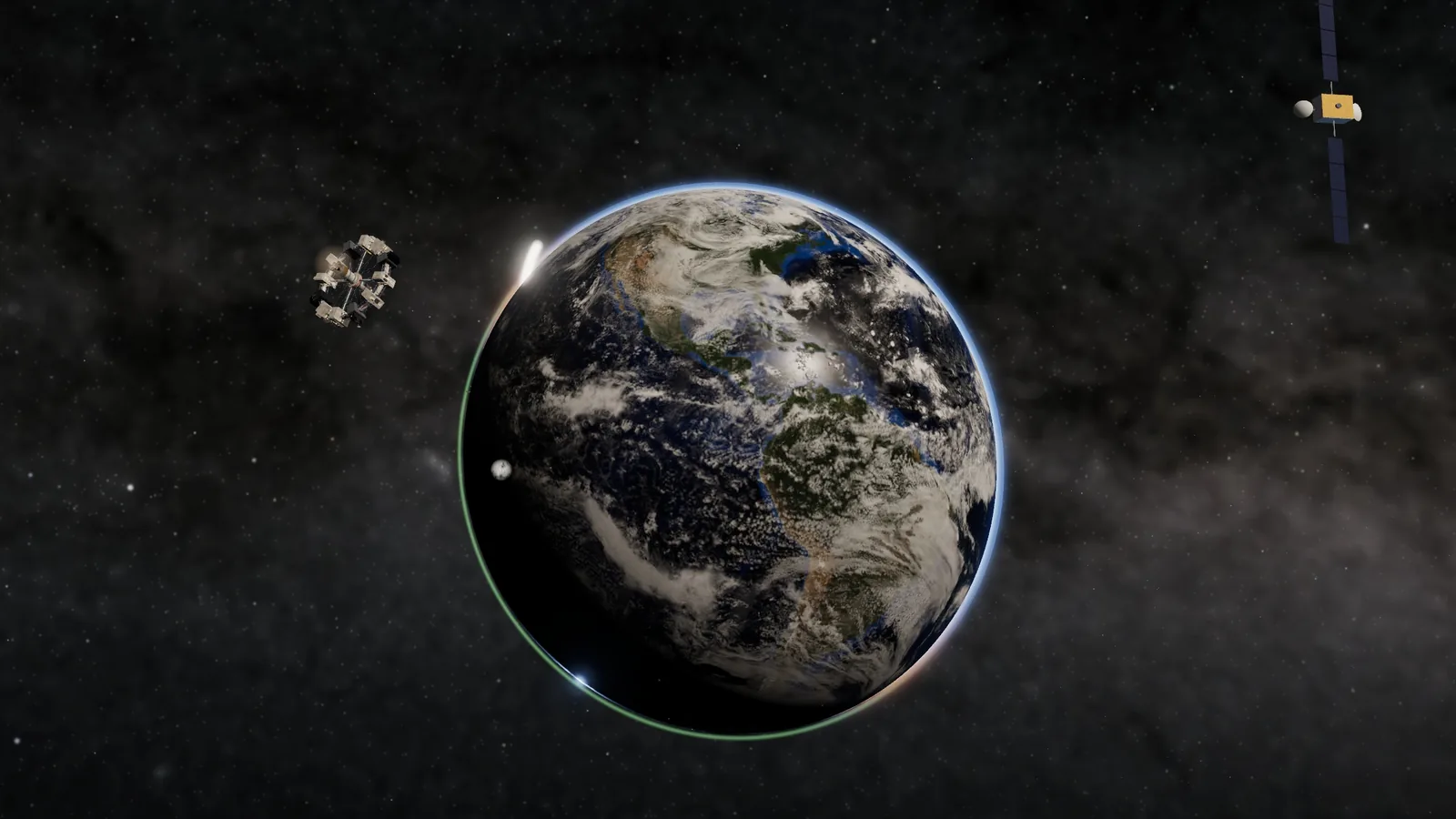
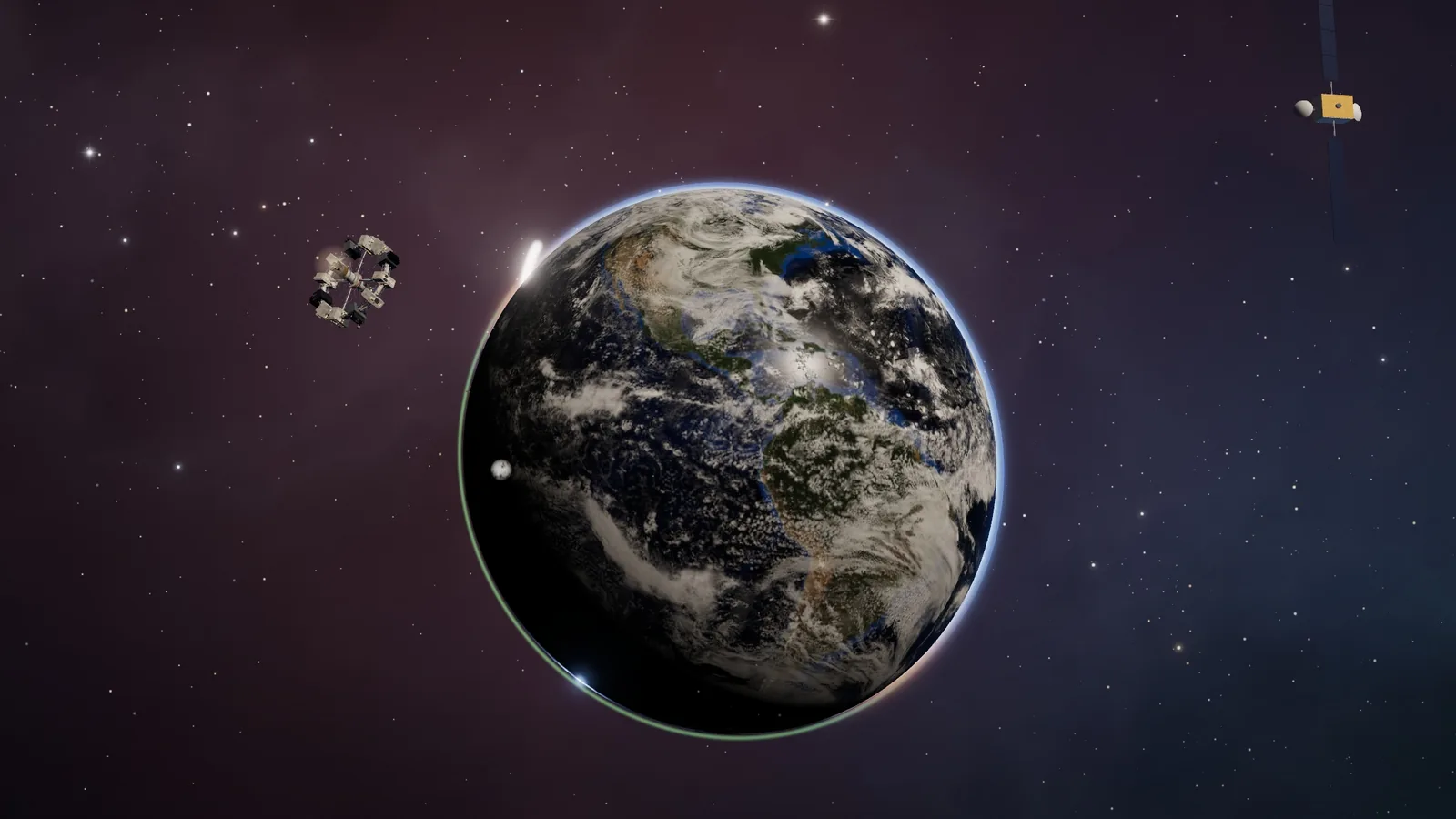
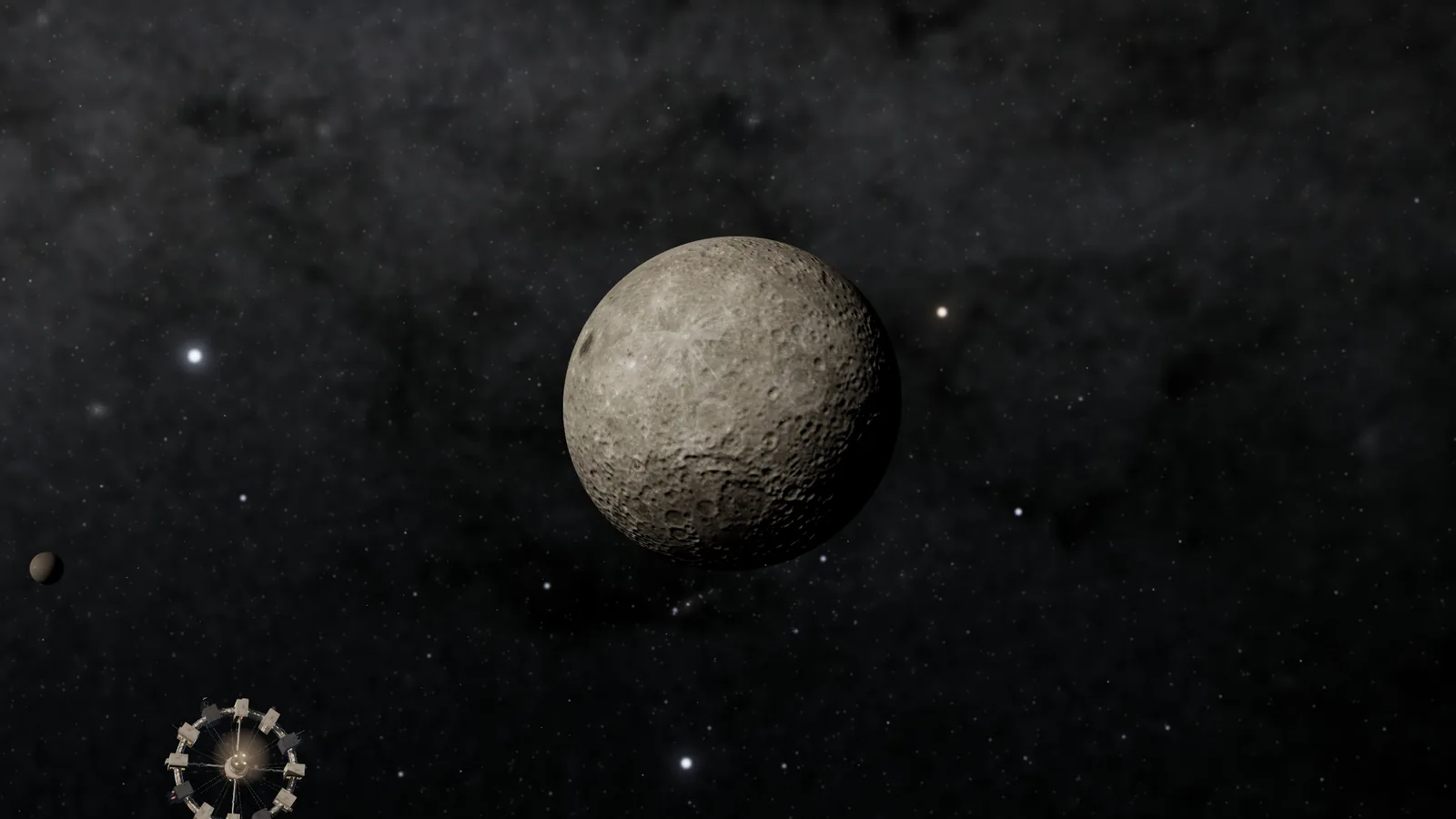
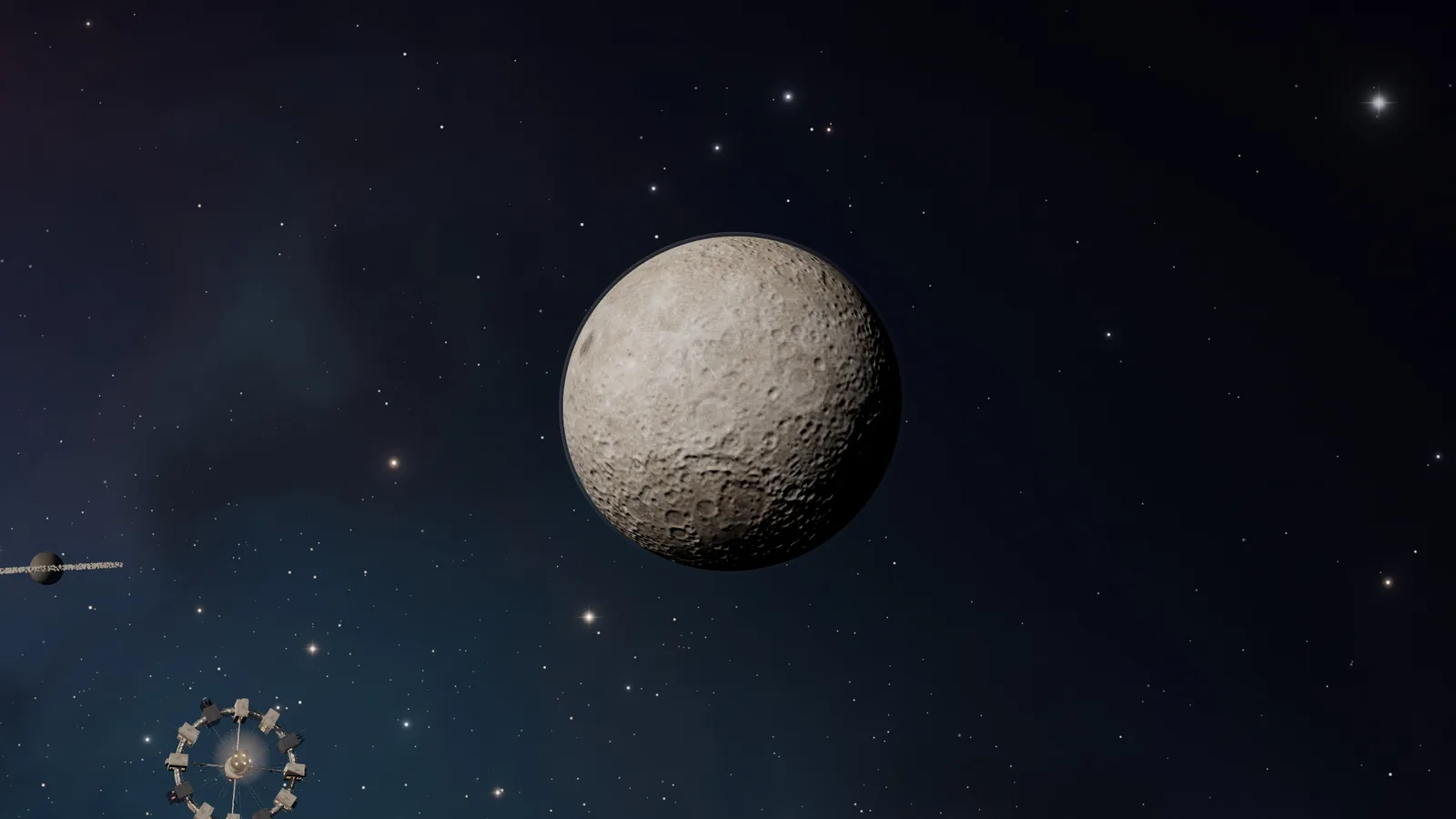
Zoom past your ship and keep going: down to 220 km over Earth's towering clouds and glittering seas, or 120 km over the Moon's craters.

 Play now
Free in your browser · a new transmission every day
Every answer warps you deeper. Krillion Space is a free space trivia game in your browser: decode one transmission from the silent Orion gateways each day, then fly an endless voyage past real planets, nebulae and galaxies, one right answer at a time.
Filmed in the game in 4K · low orbit, 220 km above Earth
What 4K unlocksFree with a sign-in
A free account (an email code or a passkey) keeps your streak and voyage on every device. On a computer or tablet it also switches the game to 4K: twice the detail on every map, the real night sky, and places 2K can't reach.
Zoom past your ship and keep going: down to 220 km over Earth's towering clouds and glittering seas, or 120 km over the Moon's craters.
56,861 stars where Hipparcos measured them, each in 3D at its own distance, so the constellations shift as you travel, under the Milky Way's glow mapped by ESA's Gaia.
Real pictures of the nebulae and galaxies on the route at 3,072 pixels: the Pillars of Creation, Stephan's Quintet, the Whirlpool and more.
2K vs 4K
Filmed at the same moment both ways. 4K gives Earth, the Moon, Neptune, Triton, Pluto and Mimas 4,096-pixel maps, puts the real stars in the sky and sharpens every telescope photo. Drag across the picture to compare.
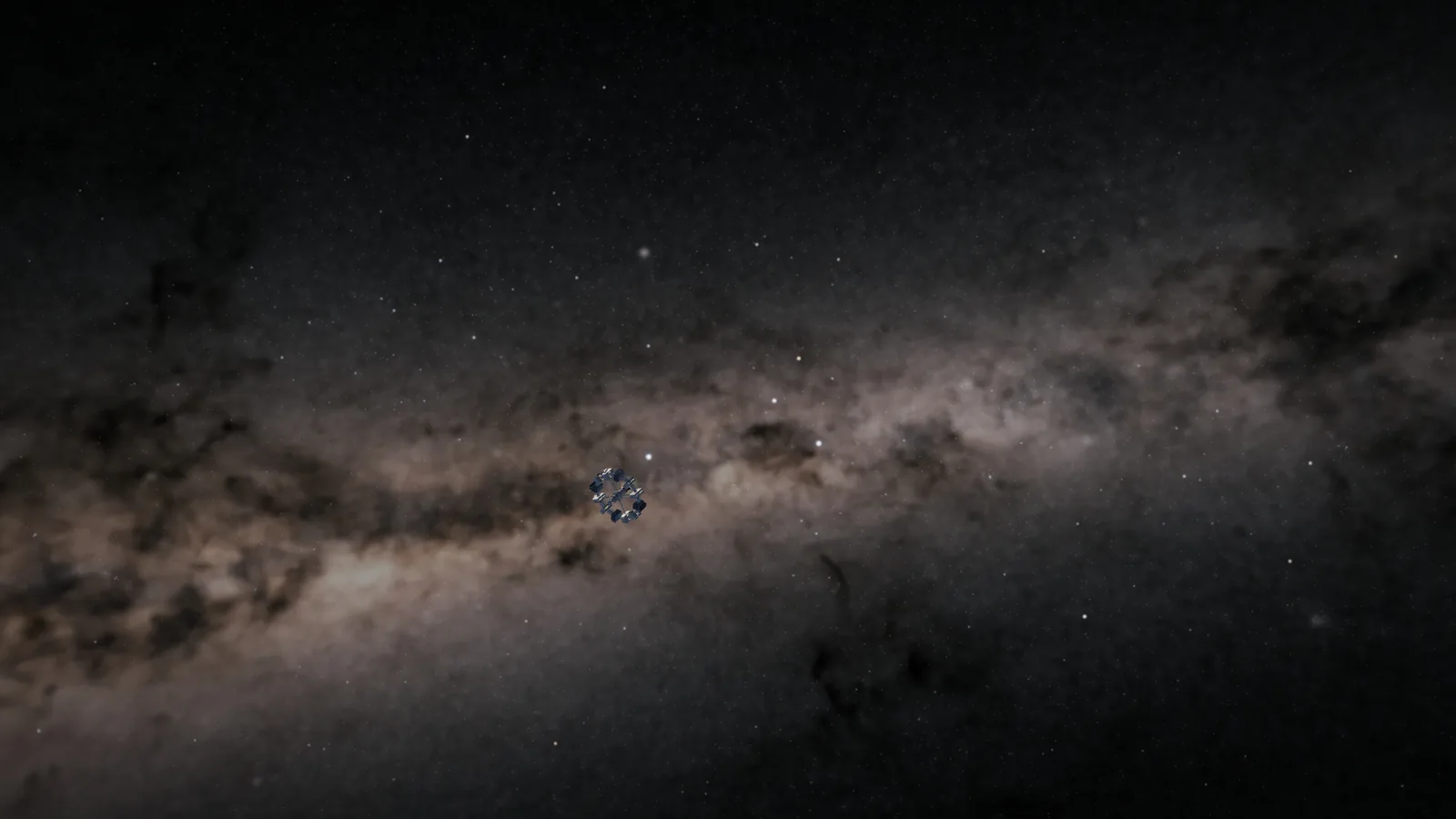
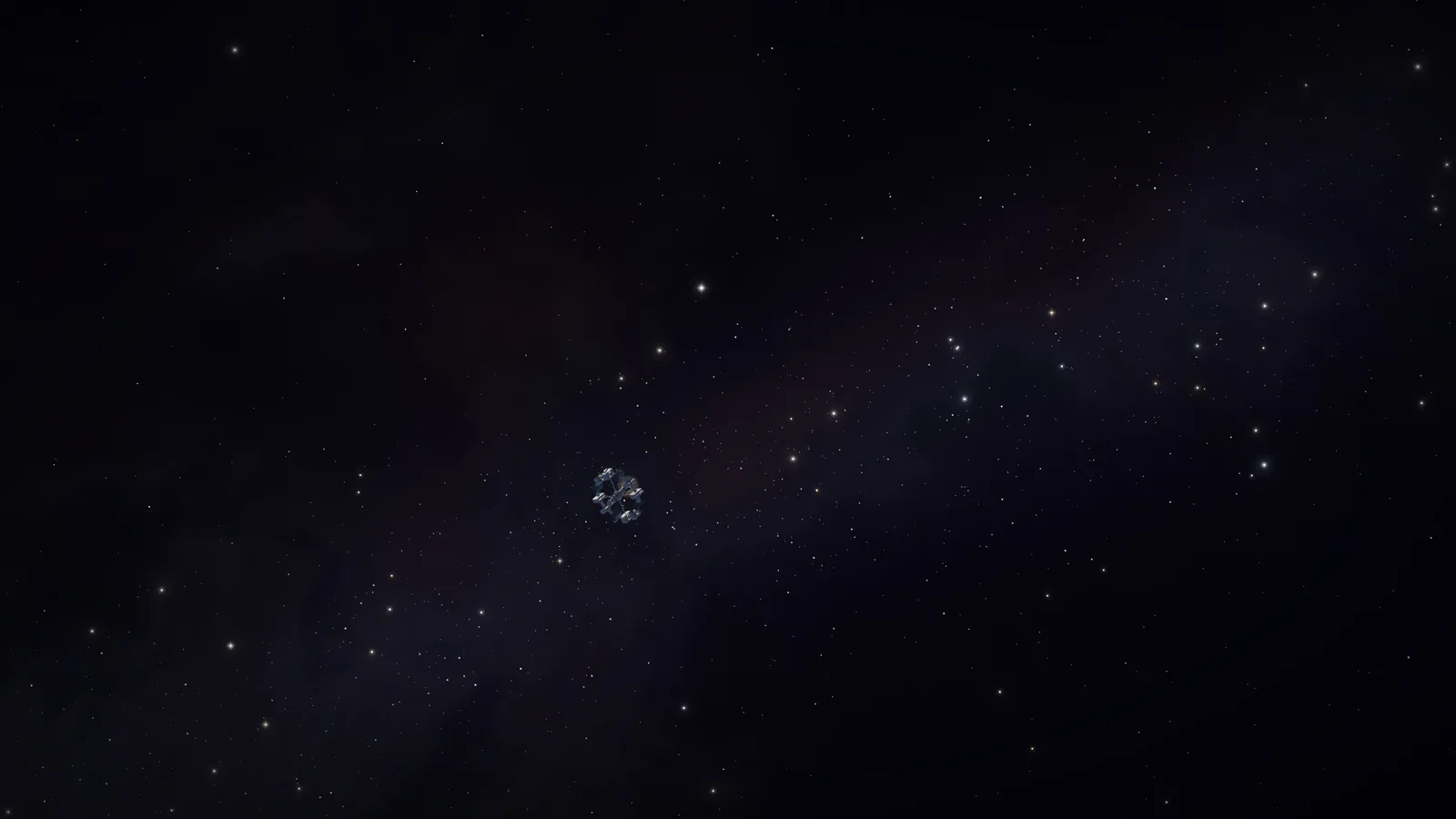
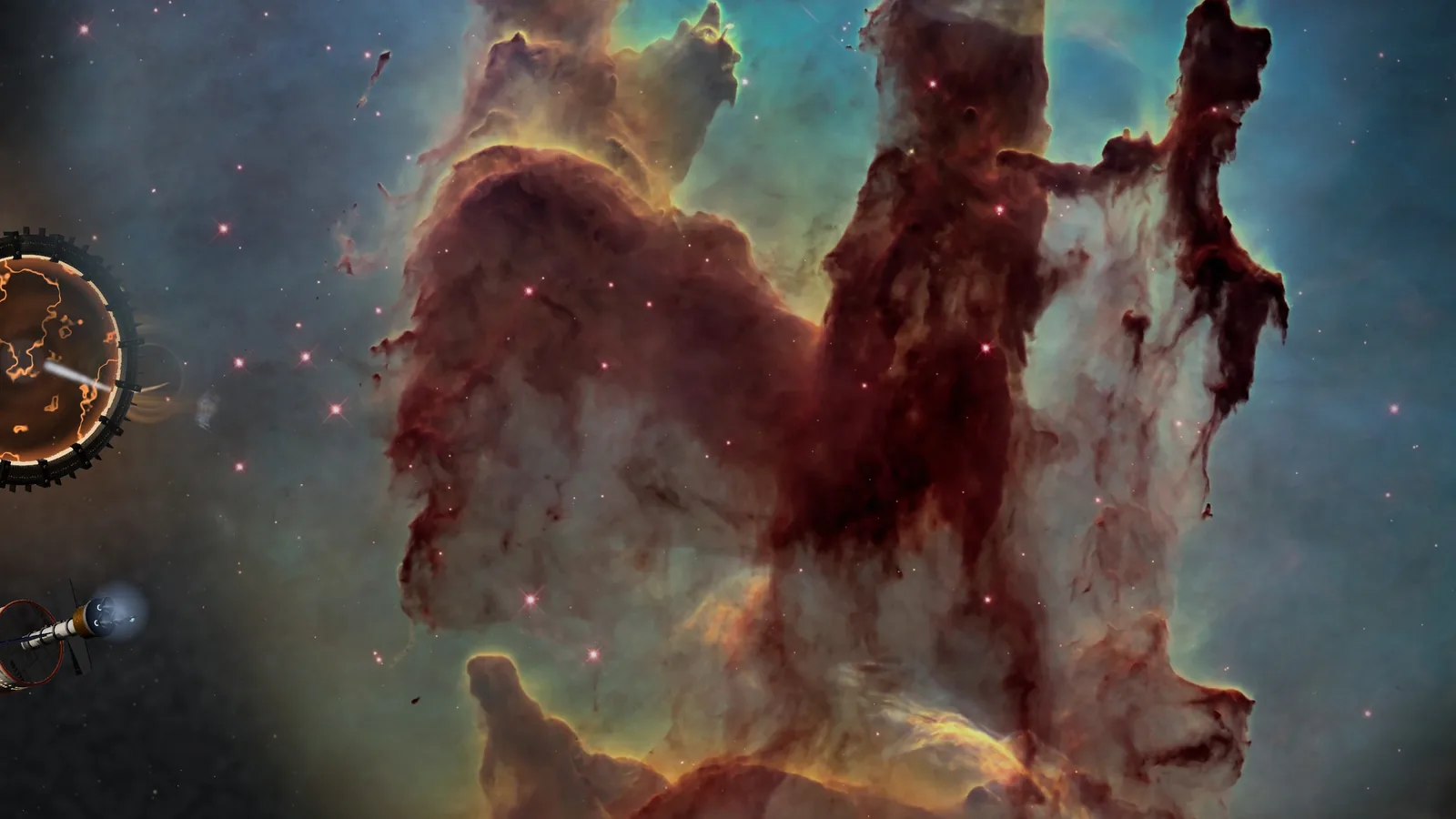
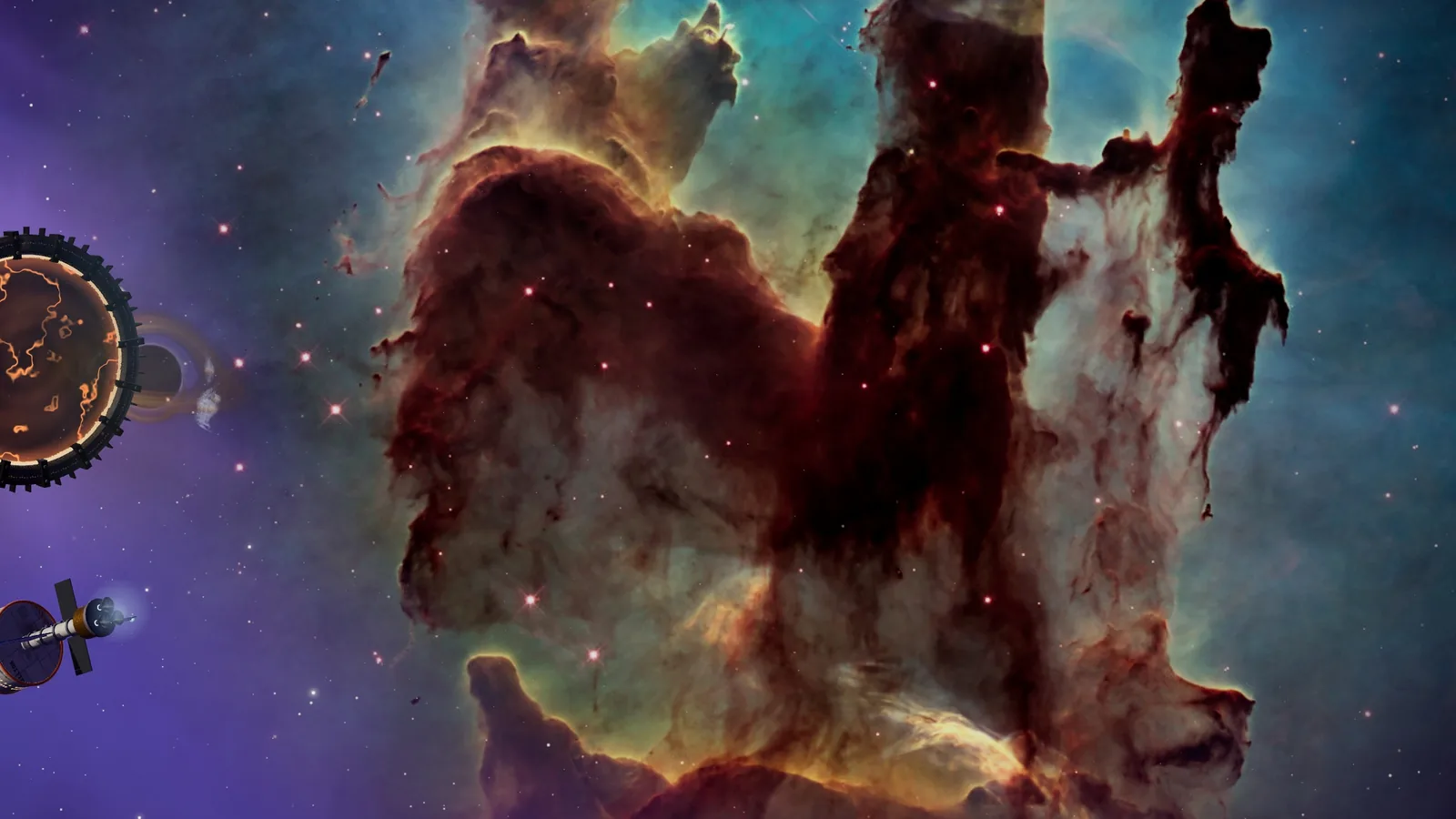
4K is for signed-in pilots on computers and tablets. Phones play in 2K.
Recon drone
At planets, moons, stars, nebulae and black holes, your ship carries a recon drone, RECON-1. Launch it and its camera takes over: it separates, falls through the air and flies low over the ground, naming real places as they pass below.
Filmed in the game in 4K. The drone flies for signed-in pilots on computers and tablets.
The voyage
Each right answer to a nav check warps your ship to the next stop on a route of real places: planets and moons, nebulae, black holes and galaxies, out to the oldest light there is. Wrong answers cost hull.
Filmed in the game in 4K. Every stop is in 2K too.
In Krillion Space the black holes are drawn with a glowing accretion disk, the thin photon ring of light bent round the hole, gravitational lensing that warps the stars behind it and, where a hole has one, a jet. The real M87*, imaged by the Event Horizon Telescope in 2019, shows a bright ring around a dark centre, brighter on one side. Visit M87*, Sagittarius A* and Cygnus X-1 on the voyage; each has a sourced fact sheet in the Star Atlas.
At black holes your ship carries a recon drone, RECON-1. Launch it and its camera takes over: you dive toward the hole and can look all the way round, 360°, as you fall. It's free in your browser on any phone, tablet or computer, with nothing to download, and the drone flies for signed-in pilots on computers and tablets.
Krillion Space draws its black holes live in your browser with WebGL, so the visualization is interactive and there is nothing to install. It's free, with nothing to buy.
You can fly into a black hole yourself: launch the recon drone at M87*, Sagittarius A* or any other black hole on the voyage, dive in and look round 360°. The game draws each hole itself in your browser, rather than playing back a NASA supercomputer simulation, and the facts come from sourced measurements such as the Event Horizon Telescope's 2019 image of M87* and its 2022 image of Sagittarius A*.
Krillion Space is a free space trivia game in your browser. Each day you decode one transmission from the silent Orion gateways, then fly an endless voyage where every right answer warps your ship past real planets, nebulae and galaxies.
Every day at 00:00 UTC, and it's the same transmission for every player in the world, so you can compare answers. Missed one? Every past transmission is in the archive.
It rotates. On rarity days (Sunday, Monday, Wednesday and Friday) you name an answer, and the rarer your correct answer is among everyone's, the more it's worth: 10 points for common up to 100 for exceptional. On deduction days (Tuesday, Thursday and Saturday) you work out the right signal in three tries, for 100, 60 or 30 points. Every rule is on the rules page.
Yes. The transmissions tell one story, so every new pilot starts at Season 1, #1, and plays them in order. Each one opens once you've answered the one before, solved or not, and you can catch up three a day until you reach the live day and play it with everyone. Today's orders are separate: you don't need them to move on.
Three small goals from Kit each day, the same for every pilot: log the day's transmission, then two more, such as three nav checks or finishing today's duel. Tap an open order to go and do it. Clearing all three counts towards a mission patch, and the card shows how many pilots have ever cleared their orders.
Every right answer earns XP: 10 for a nav check or a duel answer, plus a bonus under a crisis countdown (none if you used Focus) or for a rare Name one answer. A new account gets 50 XP, and coming back after a week away 25. The daily transmission's points (10 to 100) count as XP too, and clearing today's orders adds 50. XP climbs ten ranks, from Recruit to Fleet Admiral, and each new rank gives you a card to share. The voyage, duels and Survival each have a daily XP limit, so playing most days counts for more than playing for hours. Signed-in pilots can spend XP, without losing rank, on recon drone flights and runs to sky events (each first free, then 50 XP), a streak mender (100), one more catch-up fragment (30), one more world to name (500), and frames and marks for their share cards in the ship's log's Hangar. The rules page lists every price. Points stay the daily transmission's own score. Every right answer also shows how many you've got right in a row; a miss starts the run again. Some Earth breaks and duel rounds are Name one rounds, where you type any right answer: a Pulsar, Quasar or Supernova one, like a rare answer on a rarity day, earns a badge you can share.
From Monday 21 December, every week (Monday to Sunday, UTC) your first XP puts you in a group of about 20 pilots in your league, ranked by the XP you each earn that week. When the week ends, the top 5 move up a league and the bottom 5 move down: Orbit, Belt, Nebula, Galaxy, Cosmic. Everyone starts in Orbit, and nobody drops out of it. A group of fewer than 10 moves only its top 2 up. Your group sees your callsign and your XP for the week.
An endless run of nav checks: quick multiple-choice questions about the place you're flying to, and some are Earth breaks: casual questions about life back home, every fourth check on your first stops, then every third. Each right answer jumps your ship one stop deeper along a route of real landmarks, from the Moon and Saturn's rings to the Orion Nebula, Andromeda and the oldest light in the universe, with uncharted worlds between them. Wrong answers cost hull, and a breach drifts you back.
Some nav checks arrive under a countdown: a debris field, a solar flare, a gravity well, an ion storm or a comms blackout, and past the Local Group a galaxy's jet, a cluster's shock front or a lensing mirage. Answer in time to evade it, and sometimes earn a bonus, such as salvaged plating, a slingshot an extra stop or a shield charged by the storm. Too slow or wrong, and it hits harder than a normal miss. With a full Focus meter (10 right answers on the voyage) you can slow the countdown to half speed.
Yes. Race another pilot's recorded run in a ghost duel, or start a crew of up to six pilots and invite friends with a link. Crewmates share a leaderboard, send each other enciphered transmissions to crack, and start colonies on uncharted worlds where the crew can dock and repair.
Yes. The planets and moons use real spacecraft maps from NASA, JPL and the USGS, Saturn's rings come from Cassini, and the nebulae and galaxies are Hubble, Webb, Spitzer, GALEX and ESO photos. In 4K the Sun comes from NASA's Solar Dynamics Observatory, the stars from ESA's Hipparcos and Gaia, and the oldest light, the cosmic microwave background, from ESA's Planck. Each one is listed on the image credits page.
No. Anyone can play as a guest. Signing in with an email code or a passkey keeps your progress on every device, puts you on the leaderboards, unlocks rated duels and crews, and switches the game to 4K on computers and tablets.
Krillion Space plays in your browser on any phone, tablet or computer, with nothing to download. On a phone, add it to your home screen from the browser's share or menu button and it opens full screen like an app.
Yes. The game is free to play and there is nothing to buy. Questions or ideas? Write to support@krilion.app.
Yes. Open krilion.app/tv in your TV's web browser (or on a computer plugged into the TV), then scan the code it shows with your phone. The TV plays the game and your phone becomes the controller, with a touchpad to look around and zoom. Everything you play counts as usual, signed in or as a guest. TV browsers without WebGL 2 show a simpler flat sky instead of the 3D view.
One puzzle a day, the same for everyone, then the voyage. Free, in your browser.